


AetherSX2 Emulator
3.24.00 Reviews
App Specs
- Version
- 1.0.0
- Updated On
- License
- Free
- Downloads
- 50,000+
- Developer
- STE RIDA AGENCY
- Categories
- Arcade
- Platform
- Android
Screenshots
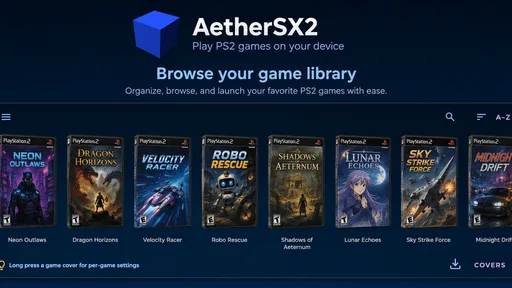
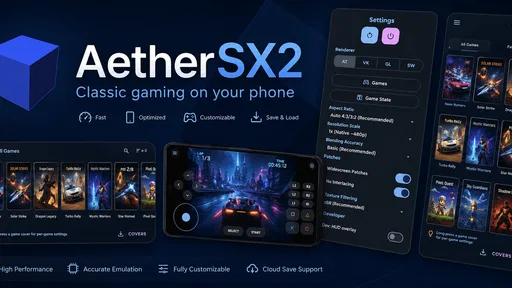
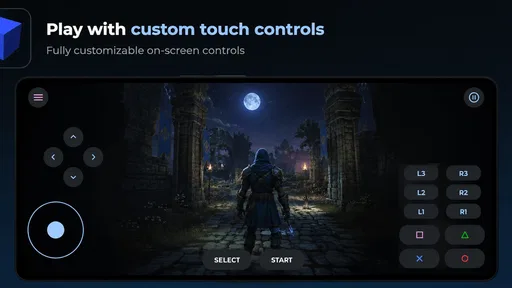
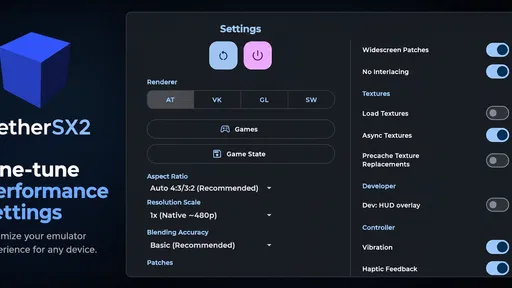
 Analysis by AppCompare
I spent time with AetherSX2 Emulator as an arcade-style game utility, and my first impression was that it is aimed at people who want more control than a basic mobile game usually offers. Its focus is emulation, with tools such as save states, HD upscaling, cheat support, and gamepad compatibility. That combination makes it feel less like a conventional pick-up-and-play arcade title and more like a configurable way to revisit supported console games on a mobile device.
The important starting point is cost: this game is free to install. That makes it easy to test without committing money first, which matters for an emulator because the experience can depend heavily on the phone, controller, and games being used. I would not treat “free” as a promise of perfect performance, though. The real value comes from whether its control options and convenience suit your setup.
How AetherSX2 Emulator feels in everyday use
The most useful part of the experience is the way it brings several practical controls together. Save states let me preserve progress at a specific moment instead of relying only on a game’s original saving method. For short sessions, that is a major convenience. I can stop after a difficult section, return later, and avoid replaying everything just to reach the same point.
That feature is especially helpful in an everyday situation. Imagine having a few minutes during a commute or waiting for an appointment. A traditional console session may not be worth starting if the next checkpoint is far away. With a save state, I can make progress in a smaller window and leave without worrying about finding a formal save point immediately. I still prefer using the game’s normal save system when possible, but the quick-save approach is useful for interruptions.
HD upscaling is another feature that changes how older games can look on a modern phone. It can make edges and menus appear cleaner than they would at their original resolution. I see this as a presentation option rather than a guarantee that every game will suddenly look new. The underlying artwork remains from the original release, and the result depends on the device and the game. Still, having the choice is valuable when the default image looks soft on a high-resolution screen.
Gamepad support gives the app a more comfortable route for longer sessions. Touch controls can be convenient when I have nothing else available, but they are not equally suitable for every type of game. A physical controller can make directional movement, timing, and multiple-button combinations feel more natural. If you already own a compatible gamepad, this is one of the clearest reasons to try the app rather than treating it as a novelty.
Cheat support adds another layer of flexibility. I would use it selectively, not as the default way to play. It can be useful for testing, revisiting a title after finishing it, or reducing repetition in a game that feels too demanding for a short mobile session. The trade-off is that cheats can remove the tension and satisfaction that make older games worth returning to. The feature is best viewed as an optional tool, not as a substitute for good game design.
Worth Reading Before You Choose

Flipboard Shows What News Apps Must Do Beyond the Feed

Switching to Android Auto Means Rethinking Your Driving Routine

Google Calendar Makes a Crowded Week Easier to Manage

Ludo King Makes the Most of the Minutes Between Plans

Baby Panda World Brings Quick Play to Modern Phones, but Its Game Library Feels Busy

ESPN’s Live Game View Makes Following Close Games Easier
Because the app is categorized as an arcade game, it may attract readers expecting quick action and simple controls. That description only partly captures the experience. The actual appeal is the combination of emulation and customization. You are not simply launching a self-contained arcade game with one fixed control scheme; you are working with an environment that can be adjusted around the game you want to play.
What the free price really means
AetherSX2 Emulator is free, so the initial decision is straightforward: there is no purchase barrier to downloading and trying it. That is a meaningful advantage over a paid app when you are unsure whether your phone and controller will work comfortably with the emulator. You can evaluate the interface and the basic experience before deciding whether it belongs in your regular gaming routine.
Free access does not automatically make it the best value for everyone. An emulator can require patience, personal setup, and some willingness to adjust options. If you want a game that launches instantly and explains every control inside one polished package, a conventional arcade release may feel more valuable even if it offers fewer technical choices. Here, the value is in flexibility rather than in a guaranteed frictionless session.
The developer is STE RIDA AGENCY, and the current version is 1.0.0. That version label is worth keeping in mind when setting expectations. I would approach the app as an early, focused tool and pay attention to how consistently it behaves on my own device rather than assuming that every phone will deliver the same result. The minimum operating system is Android 8.0, which keeps it accessible to many older Android devices while still leaving performance dependent on the hardware.
The age rating is Everyone, making the app broadly approachable from a content-rating perspective. That does not mean every game used with an emulator will be suitable for every person, so I would still consider the content of the individual titles being played. The rating describes the app’s listed audience, not every possible piece of software a user might run through it.
Where the value is stronger than the short description suggests
The first less-obvious strength is the separation between convenience and commitment. Save states are not only about recovering from failure. They can change the way I organize a library of games. I can create a temporary state before experimenting with a difficult route, a boss encounter, or a new control arrangement, then return to a safer point if the experiment goes badly. Used carefully, that turns the emulator into a practical testing space.
The second is the trade-off between upscaling and authenticity. I would not leave HD upscaling on automatically just because it sounds better. Some older visuals were designed around softer edges, and a sharper presentation can make certain artwork look less natural. My preferred approach is to compare the game with and without the enhancement, then keep the setting that preserves the atmosphere I remember. The feature is valuable precisely because it gives me that choice.
The third is the way a controller changes the app’s usefulness. Without a gamepad, I would judge it mainly on whether touch input feels manageable for the particular game. With one, the app becomes more credible for longer sessions and games that need precise timing. That means the same free download can have very different value for two users: one may see a convenient retro tool, while the other sees a comfortable replacement for carrying another device.
Cheats also create a practical workflow beyond simply making a game easier. I can use them to explore content, test a setting, or bypass a section that does not work well with touch controls. The important discipline is to keep a normal save separate from experimental states. That way, trying a cheat or unusual configuration does not have to spoil the main playthrough.
Limitations I would consider before installing
The biggest limitation is that an emulator is not the same thing as a complete game library. The app provides the environment and its controls, but the quality of the overall experience depends on what you intend to play and whether your setup handles it well. Someone expecting a ready-made selection of arcade games may be disappointed because the appeal is not the size of a built-in catalog.
Performance is another reason to keep expectations realistic. HD upscaling asks the device to present older material at a cleaner resolution, and more demanding games may be less comfortable than simpler ones. I would begin with conservative settings, confirm that controls respond properly, and only then increase visual options. Chasing the sharpest image first can make the experience less stable or less comfortable, while a modest configuration may feel better in actual play.
Touch controls are convenient but can become a source of frustration. A virtual directional pad may cover part of the screen, and buttons do not provide the same tactile feedback as a physical controller. For a short session, that may be acceptable. For a game built around repeated precision, I would strongly favor a gamepad. If you do not own one and do not enjoy touch controls, the app’s headline features may not compensate for the basic handling problem.
Save states also need sensible use. They are excellent for interruptions and experimentation, but relying on them exclusively can create fragile progress. I would keep ordinary in-game saves as a backup whenever the game supports them. A quick state is convenient; it should not become the only copy of progress that matters.
Cheats bring a similar caution. They can make an old game more accessible, but they can also create unexpected balance problems or remove the reason to explore. I would use them as a personal adjustment tool rather than enabling everything at once. That approach preserves more of the original experience while still letting me work around a tedious or unsuitable section.
The rating picture is mixed but useful context. The app has an average rating of 3.2 from around seventy ratings, with four written reviews. I would read that as a reason to test it personally rather than treating the score as a final verdict. A relatively small review pool can reflect very different devices, controllers, and expectations, and emulator experiences are particularly sensitive to those differences.
Who is most likely to enjoy it
I think the best audience is an Android user who already knows why they want emulation. If you enjoy revisiting older games, like adjusting presentation options, or want quick access to save states, the app offers useful tools without an upfront price. It is also a good fit for someone who owns a gamepad and wants a more comfortable mobile setup than touch controls alone can provide.
It suits patient users better than people who dislike configuration. The payoff comes from choosing sensible settings, testing controls, and learning which features help rather than turning everything on immediately. That small amount of involvement is part of the product’s character. I found the flexibility rewarding, but I would not recommend it to someone who wants every decision made automatically.
It can also work for players returning to a favorite title after a long break. Save states reduce the effort of getting back into the action, while upscaling can make the image more pleasant on a current display. Cheats may help someone revisit a game for its story, atmosphere, or unusual levels without repeating every difficult challenge. In that use case, the app is less about chasing a perfect original run and more about making an old experience fit modern habits.
I would skip it if your priority is a self-contained arcade game with instant onboarding, fixed controls, and no need to think about setup. I would also look elsewhere if your main expectation is guaranteed performance across every game or device. A conventional mobile arcade title is usually the better choice when you want predictable touch controls, a clear progression loop, and a single package designed specifically for your phone.
How it compares with ordinary arcade alternatives
Compared with a typical arcade game downloaded from a mobile store, this app offers more control over the playing environment but less of the immediate simplicity. A standard arcade title normally gives you its own menus, assets, progression, and touch layout. You open it and start playing. AetherSX2 Emulator is more adaptable, but that adaptability means the user has a larger role in shaping the session.
Compared with a basic emulator that only launches games, the combination of save states, visual upscaling, cheats, and gamepad support makes this a more feature-oriented option. The benefit is clear when you want to fine-tune the experience. The cost is that each added tool creates another decision. I would choose this app over a stripped-down alternative when customization matters more than simplicity.
It also compares differently with playing on original hardware. A phone is easier to carry, and a save state can fit around short breaks in a way a living-room setup may not. On the other hand, original hardware with a physical controller can feel more natural and consistent. For me, this app is most compelling as a convenient second way to play, not necessarily as a complete replacement for every authentic setup.
Practical habits that improve the experience
I would begin by pairing the gamepad before spending time on visual adjustments. Controls affect enjoyment more directly than sharper graphics, and a good controller can make the difference between a comfortable session and one spent fighting the virtual buttons. If the game is simple enough for touch, I would still check whether the button layout leaves enough screen space for the action.
Next, I would create a normal save before experimenting with cheats or unusual settings. Then I would use a separate save state for testing. This simple habit protects the main playthrough and makes the advanced features feel safer. It also helps answer a practical question quickly: is a setting genuinely improving the game, or does it only look impressive in a menu?
For upscaling, I would compare a familiar scene rather than judging the setting from a title screen. Look at small text, distant objects, and fast movement. A sharper image is not automatically easier to read or nicer to watch. The best choice is the one that keeps the game clear without making the phone work harder than necessary.
Finally, I would treat short sessions as a strength. Save states make it easier to play for ten or fifteen minutes without needing a large uninterrupted block of time. That is where the app has a practical advantage over some traditional setups. It can fit around daily life, provided you maintain regular saves and do not depend entirely on temporary states.
My verdict on its value
My overall view is positive but specific. AetherSX2 Emulator delivers real value as a free, configurable arcade emulator for users who want save states, improved presentation, cheat options, and gamepad support in one place. Those features are meaningful, especially for people returning to older games or fitting play into short breaks.
I would not recommend it simply because it costs nothing. The right question is whether you want an adjustable emulator rather than a ready-to-play mobile arcade product. If you are comfortable testing settings and already have a controller or a clear reason to use save states, the free access makes trying it an easy decision. The app can become a useful part of your gaming routine without requiring an upfront purchase.
If you want instant simplicity, dependable touch controls, or a built-in game experience with no setup decisions, I would skip it in favor of a conventional arcade game. The same flexibility that attracts experienced users can feel like unnecessary work for everyone else.
With over fifty thousand installs, it has clearly reached a meaningful group of Android users, but I would still judge it on your own phone and preferred games. My recommendation is to try it when convenience and customization matter more than a completely effortless start. The best reason to choose it is control over how you play, not the promise of a perfect one-size-fits-all experience.
Pros
- Excellent performance on many Snapdragon-powered devices.
- Supports save states
- memory cards
- and customizable control layouts.
- Offers widescreen patches and texture filtering for improved visuals.
- Includes fast-forward
- frame limiting
- and multiple rendering options.
- Works offline once games and required files are stored locally.
Cons
- Compatibility varies widely between games and smartphone models.
- Requires legally dumped PS2 BIOS and game files from your own console.
- Can drain the battery quickly during extended gaming sessions.
- Touchscreen controls are less comfortable for action-heavy games.
- Development has stopped
- so newer Android versions may cause issues.
FAQs for AetherSX2 Emulator
What is AetherSX2 Emulator, and what devices does it support?
AetherSX2 is an Android emulator designed to run PlayStation 2 games on compatible mobile devices. In testing, performance depended heavily on the phone or tablet’s processor, GPU, cooling, and Android version. Modern devices with capable Snapdragon hardware generally provide the smoothest experience, while older or entry-level phones may experience slowdowns, graphical glitches, or frequent frame-rate drops.
Do I need PlayStation 2 BIOS files and game copies to use AetherSX2?
Yes. AetherSX2 requires a legally obtained PlayStation 2 BIOS file and game images, such as ISO files, to operate. The emulator does not include copyrighted games or BIOS files. Users should create backups from PlayStation 2 hardware and discs they own, while following the laws applicable in their country. Downloading unauthorized game files can violate copyright regulations and may expose your device to unsafe files.
How well does AetherSX2 run PlayStation 2 games on Android?
Game performance varies considerably because PlayStation 2 emulation is demanding. During use, well-optimized titles can run close to full speed on powerful Android phones, especially after adjusting the graphics renderer and resolution. More demanding games may require lower internal resolution, speed adjustments, or other settings. Results are not guaranteed for every title, even when the device appears powerful on paper.
What features does AetherSX2 offer for gameplay and customization?
AetherSX2 includes features expected from a modern emulator, including save states, memory-card support, customizable on-screen controls, controller compatibility, widescreen options, internal-resolution scaling, texture filtering, and multiple graphics settings. These options make it possible to improve image quality or performance, although changing advanced settings without understanding their purpose can introduce glitches, audio problems, or instability in certain games.
Is AetherSX2 still safe and actively maintained?
AetherSX2 was widely recognized as one of the strongest PlayStation 2 emulators for Android, but users should check the current development and distribution status before installing it. Official availability and updates may differ from what third-party websites claim, and unofficial modified versions can contain unwanted software. Download only from a trustworthy source, review requested permissions, and avoid APK files that promise pirated games or suspicious extra features.


